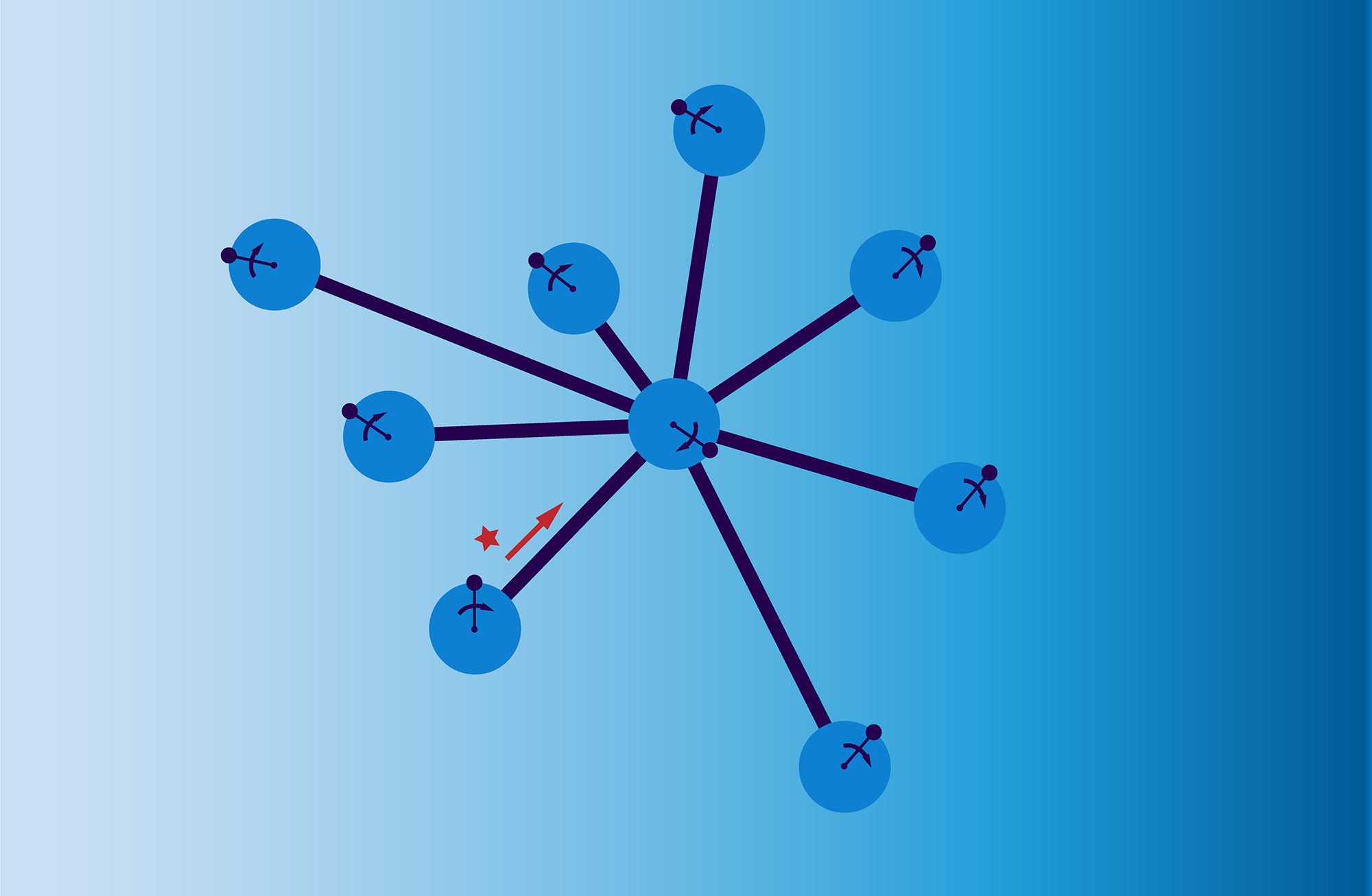
Deadlocks in the synchronization of oscillators
Certain oscillator networks suffer from deadlocks that prevent them from synchronizing. We derived the likelihood for such constellations in star graphs and found that they also occur in random graphs.
Certain oscillator networks suffer from deadlocks that prevent them from synchronizing. We derived the likelihood for such constellations in star graphs and found that they also occur in random graphs.

Scientists of the doctoral school “Networked Autonomous Aerial Vehicles” implemented a self-adaptive swarm of drones and showcased it in Klagenfurt’s new drone hall, one of the largest and most modern facilities of its kind.
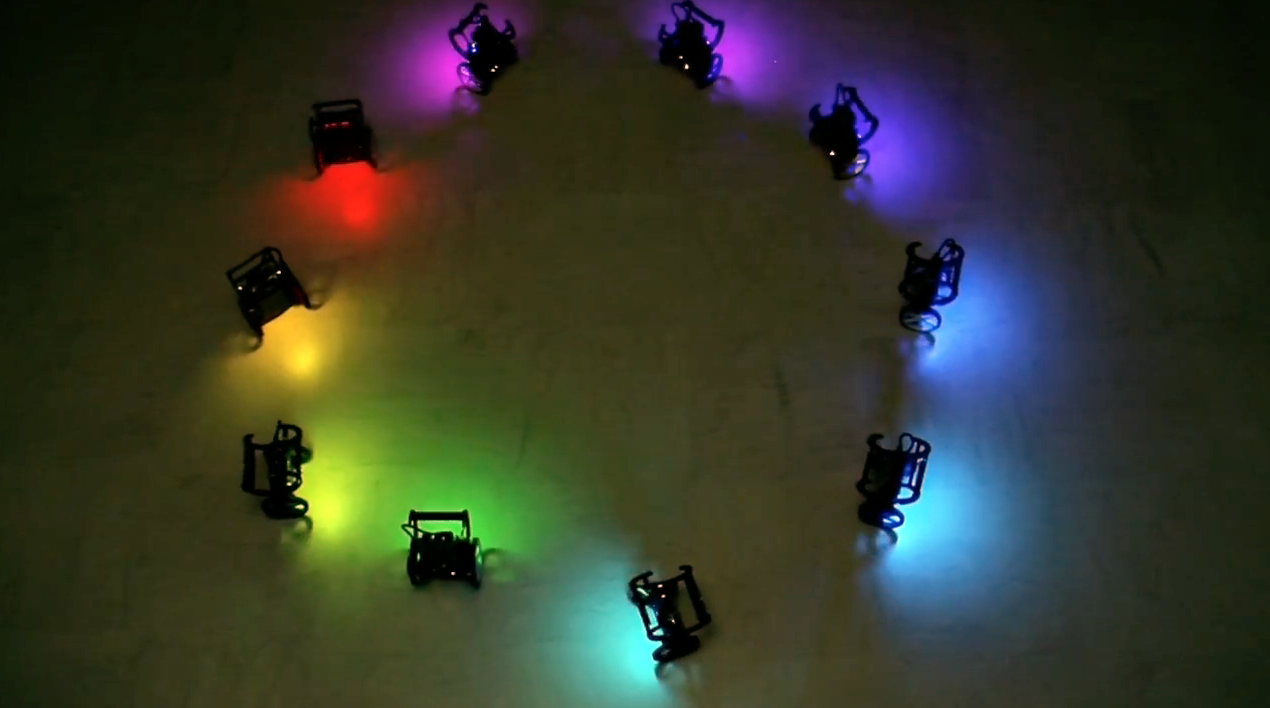
The swarmalator model for systems in which synchronization and swarming are coupled is implemented and studied for the first time in a technical system.
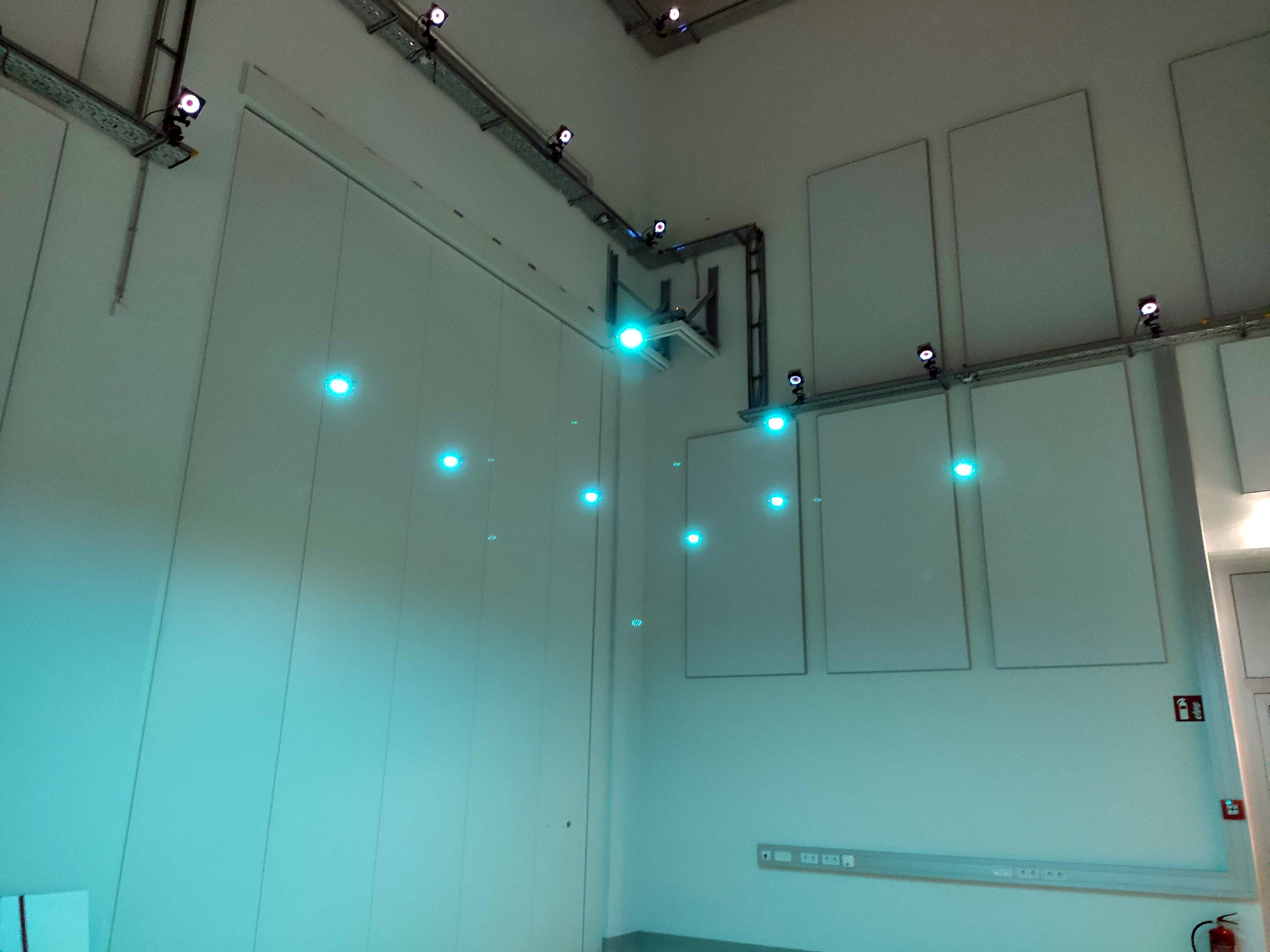
Wherever several clocks tick simultaneously, it is tricky to get them all to display precisely the same time. This can be a challenge for drone swarms that are airborne together. To tackle this problem, young scientist Agata Barciś is developing new technologies.
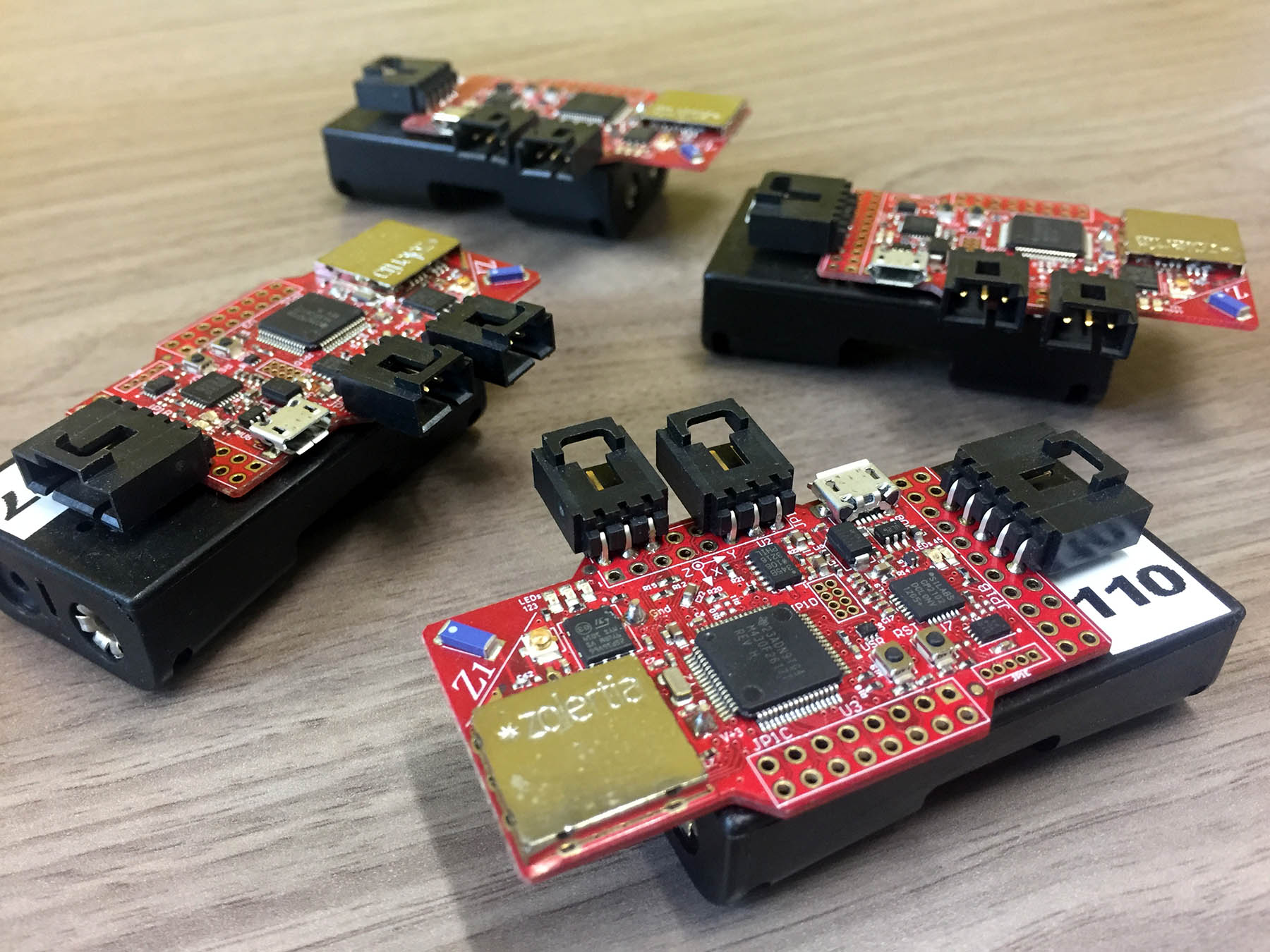
A time synchronization technique for networked devices with low-precision oscillators and low computational power is proposed and evaluated by experiments.

Synchronization algorithms based on the theory of pulse-coupled oscillators are evaluated on programmable radios. It is experimentally demonstrated that the stochastic nature of coupling is a key ingredient for convergence to synchrony. We propose a distributed algorithm for automatic phase rate equalization and show that synchronization precisions below one microsecond are possible.
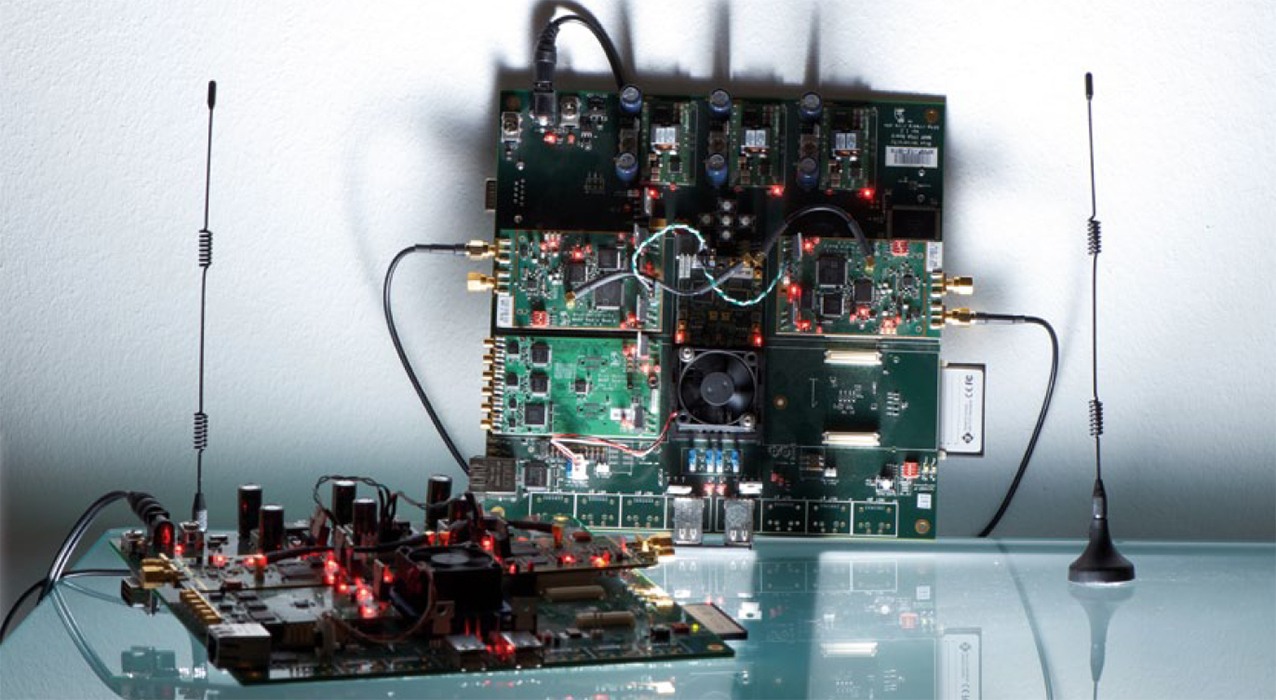
The precision of synchronization algorithms based on the theory of pulse-coupled oscillators is evaluated on FPGA-based radios for the first time. Measurements show that such algorithms can reach precision in the low microsecond range when being implemented in the physical layer.
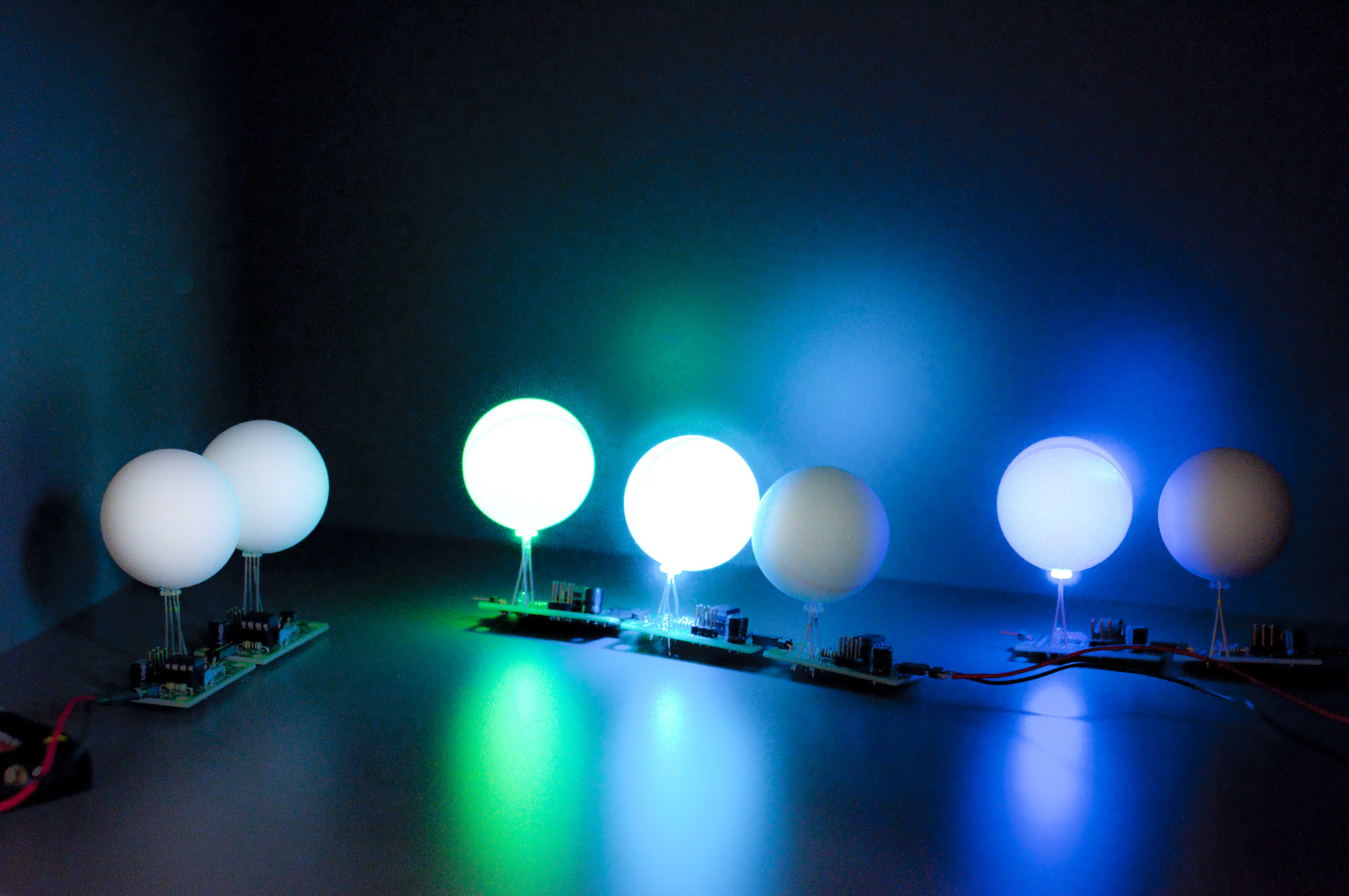
We mathematically analyze how time synchronization can be guaranteed in arbitrary network topologies and show that the stochastic nature of interactions between network entities can lead to advantageous properties.